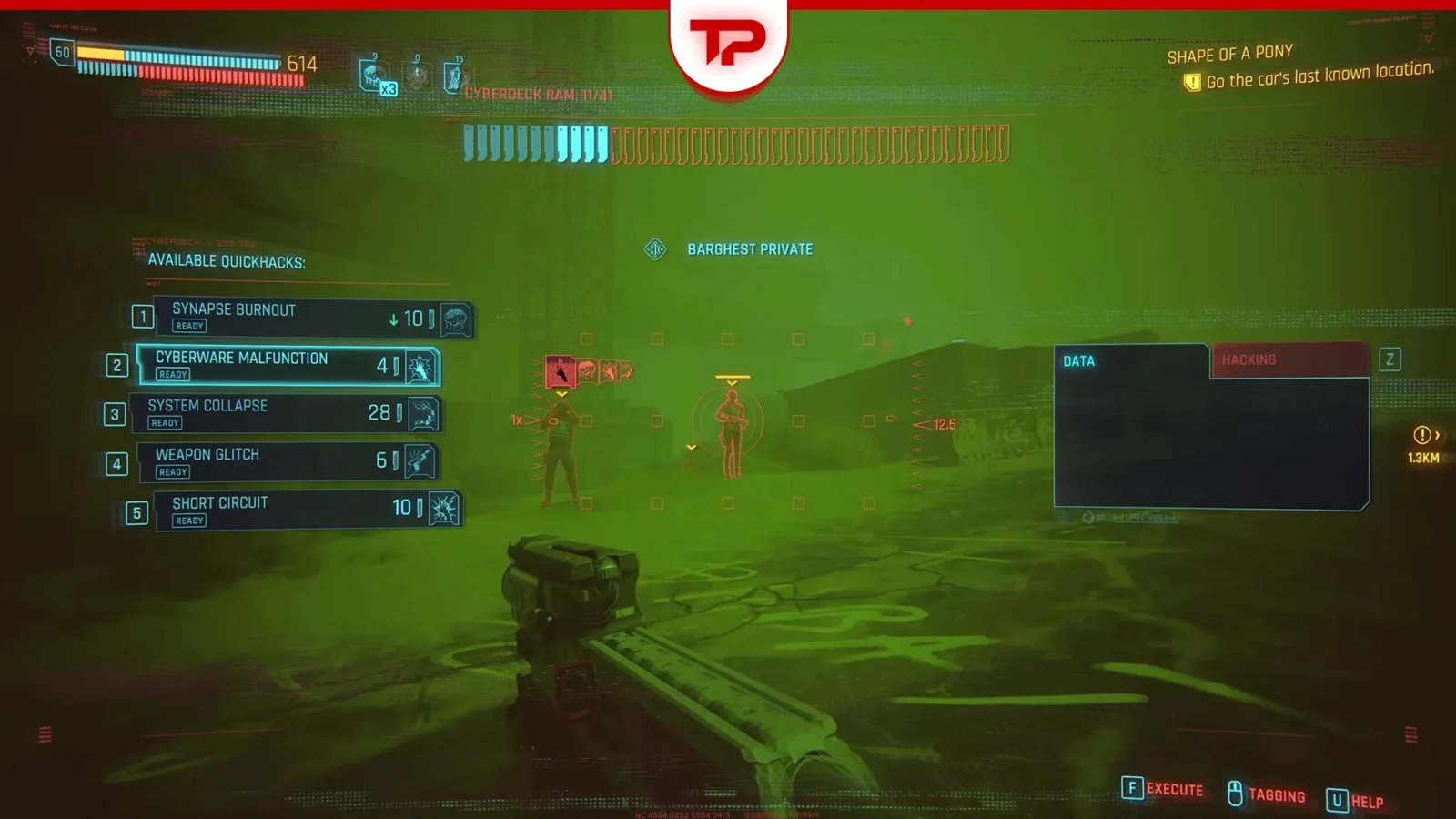
Netrunner progression rewards making hacking a regular part of your play. It is a separate skill track, so your character level alone does not tell you how far it has developed. The useful question is not simply how to gain experience quickly: it is how to build a hacking routine that still works when the first plan goes wrong.

Start with your current skill screen
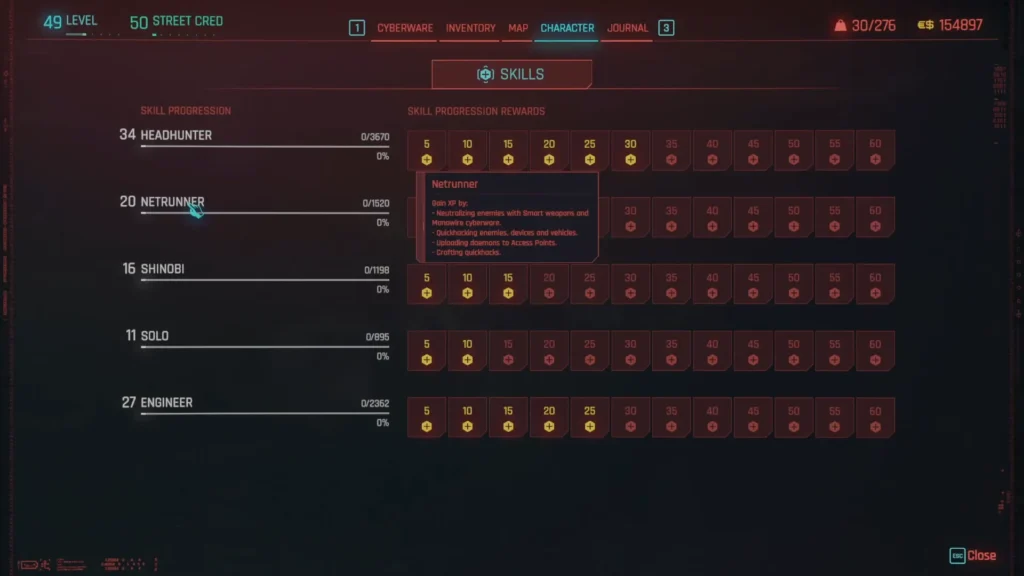
Open Character and check Skill Progression. Record the Netrunner rank and read the next milestone before changing equipment. This establishes a baseline and prevents you from confusing an attribute investment, a perk unlock, and a skill reward. They contribute to a build in different ways; treat the labels in the current game as the authority for their exact effects.
Then look at the quickhacks you actually use. Choose a small set with clear jobs rather than filling your routine with options you rarely activate. For example, decide what starts an encounter, what helps when an enemy closes the distance, and what you can still do while waiting for resources to recover.
Build a repeatable hacking routine
Before an encounter
Check your available RAM and the cost of the hack you intend to use. Identify a safe position and a fallback weapon. Planning both matters: a resource-heavy opening is less useful if it leaves you exposed without a second action. Your fallback does not need to define the whole build; it needs to keep the encounter manageable.
During the encounter
Use quickhacks deliberately instead of spending every available point as soon as a target appears. Watch what changes after the first upload. If the target remains a threat, decide whether another hack solves that problem or whether movement and cover are the better next step. This makes practice informative rather than merely repetitive.
After the encounter
Check whether the Netrunner track advanced, then note the point at which your plan became awkward. Was the opening too expensive? Did RAM recover too slowly? Did you simply lose sight of the target? Each problem calls for a different adjustment, so avoid replacing several implants at once.
Capacity and recovery solve different problems
More available RAM can help you afford a demanding sequence; recovery supports repeated actions over time. Neither is automatically the best purchase. Compare the sequence you want with the resources you actually have, then inspect equipment and Intelligence perks that address the gap. Read requirements and descriptions before committing points or money.
A practical comparison is to keep the same quickhack set for two ordinary encounters and change only one supporting choice. Look for a smoother routine rather than a dramatic number on an equipment screen. Enemy differences make this an informal comparison, not a controlled damage test, but it can still reveal obvious friction.
Common mistakes to avoid
- Assuming character level and Netrunner rank are the same progression system.
- Buying an impressive cyberdeck without checking whether its benefits suit your routine.
- Treating every shortage as a capacity problem when recovery or positioning may be responsible.
- Expecting a single equipment change to compensate for unused or mismatched perks.
A useful next step
Choose one regular mission, use hacking throughout the situations where it makes sense, and inspect Skill Progression afterward. Keep the successful actions and change the weakest part of the sequence. This develops a usable character while building the skill, without depending on a promised farming exploit or a universal “best” loadout.

Related guides
- Cyberpunk 2077 Operating Systems: Cyberdeck, Sandevistan, or Berserk?
- Cyberpunk 2077 Frontal Cortex Cyberware: Diagnose RAM and Recovery Problems
- Cyberpunk 2077 Hand Cyberware: Match Smart Link and Other Options to Your Weapon
Information and image source: Cyberpunk 2077 Netrunner Skill: Fast XP & Best Perks — TposeGaming. Version framework: CD PROJEKT RED’s official Update 2.0 notes. Check numerical effects and purchase requirements in your installed game.