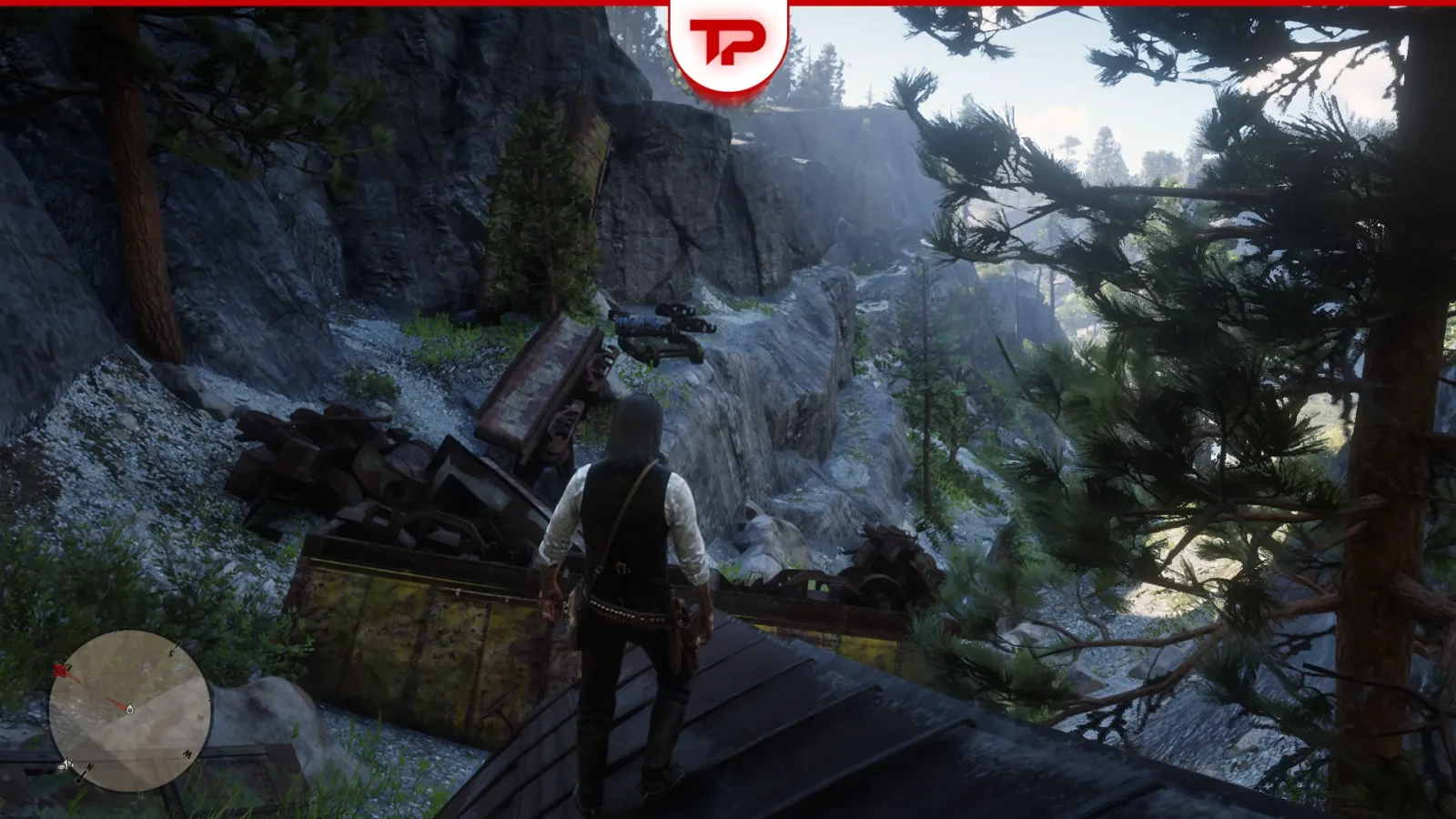
Identify the upright carriage
The train wreck treasure is near Cotorra Springs, south of Wapiti Reservation and west of Bacchus Station. Search below the railway tracks for an upright carriage. It contains two gold bars, worth $500 each at a Fence. To enter, pass the upright car, find the rock path on the left, climb to the upper ledge, cross the gap, and jump into the carriage. The difficult part is the approach, not a puzzle inside the wreck.

Inspect the route before jumping
Save on stable ground before you begin the climbing section. Then take a moment to identify the destination carriage and the rock that connects to it. If you cannot see where a jump is meant to land, do not make that jump yet. A camera angle from the side often reveals the gap more clearly than a view directly behind the character.
Leave the horse out of the climbing route. The final approach needs deliberate movement around small ledges, and an animal standing close to the starting point can make positioning awkward. Keep the route simple: approach the first ledge, stop, align with the landing area, and make one movement at a time. The fact that the treasure is visible does not make a direct drop the correct route.
Make the ledge crossings consistently
Use enough space to line up a crossing, but avoid turning at the edge while the character is already moving quickly. A late camera correction can change the apparent direction just when you need a stable reference. If you miss, note whether the problem was the starting angle, the take-off point, or the landing position. Adjust that one part on the next attempt.
Do not let a failed jump turn the approach into a chain of hurried attempts. Reaching a stable ledge is a useful checkpoint for your attention even when it is not a game checkpoint. Stop there, look at the next gap, and identify the landing surface again. This makes the route easier to repeat than trying to memorize a single uninterrupted sprint.

Collect both bars and plan an exit
Once inside, inspect the bottom of the carriage and let each pickup complete. Check the inventory total before deciding that the stop is finished. The narrow space can make objects overlap visually, so a second careful look is more useful than repeatedly pressing the interaction button while turning.
Plan your exit before moving toward an opening. A visible window is not a promise that every drop outside it is harmless. Look at the ground below and choose deliberate movement. Keep the save from before the climb until you are satisfied that the treasure is collected and you are safely outside. Avoid treating a reload trick as the only way to finish the route.
When to combine this with another treasure
The surrounding region contains other treasure destinations, but finish this technical climb before adding more stops to your session. A longer list is not automatically a better route. If you have already spent several attempts on the ledges, returning to ordinary roads and banking the completed reward may be the better next decision. Record the wreck as complete so a future visit starts from exploration rather than uncertainty about the bars.

Continue your RDR2 route
- RDR2 Jack Hall Gang Treasure: All Three Route Stages
- RDR2 High Stakes Treasure: Waterfall, Lagoon and Cliffs
- RDR2 Poisonous Trail: Maps, Cave Route and Four Gold Bars
Source reference: TposeGaming. Written as a practical Story Mode guide. Planning recommendations are GameThrum editorial guidance; no firsthand playtest is claimed.


