
The useful starting rule
TposeGaming describes Apotheosis as a fusion system influenced by ingredient properties, with up to six inputs. Its author explicitly calls the account based on developing experience. Use that as a reason to test deliberately: this article explains a controlled experiment, not a definitive recipe catalogue or a promise that every combination produces a fixed result.
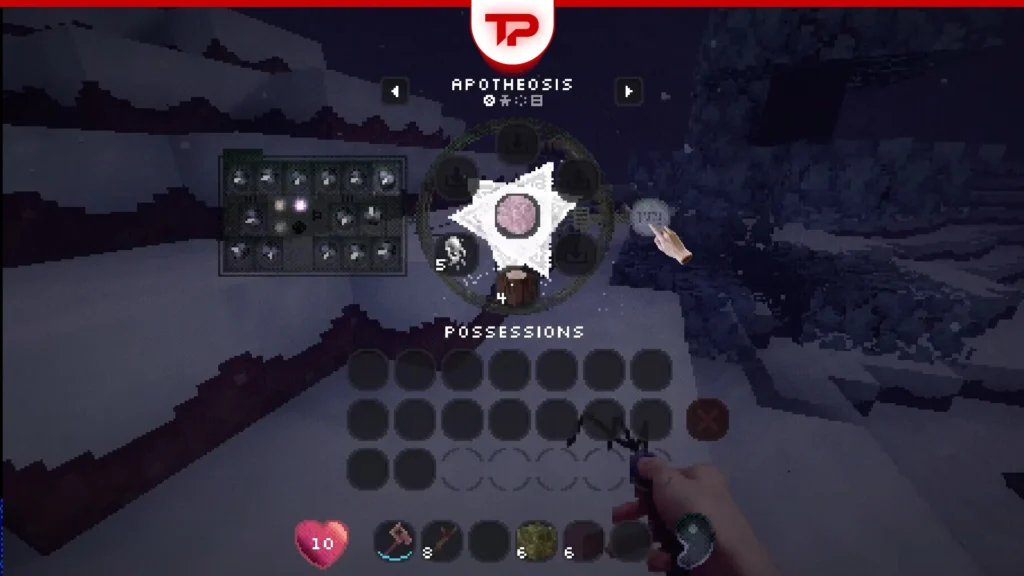
State what you are trying to make
Choose a practical objective before filling the inputs. Are you trying to reproduce an item, compare two materials or discover something new? Those are different experiments. Reproduction needs an exact record of the starting combination; comparison needs a deliberate change; open exploration needs a limit on how many resources you are willing to spend.
Keep the objective modest for the first test. A result that answers one clear question is more useful than a spectacular-looking item whose ingredients you cannot remember. Write the intended function in plain language rather than selecting a target only because its name sounds powerful.
Keep a baseline and change one input
Record every ingredient in the initial combination, including quantities where the interface distinguishes them. Label that attempt as your baseline. For the next attempt, change one element and leave the rest as close as possible to the recorded setup. This makes the result easier to interpret even if the game’s underlying selection process is not fully understood.
Use neutral notes: “with material B, this result appeared” is stronger than “material B always creates this item.” A single observation supports the first statement, not necessarily the second. Repeat a promising combination before treating it as part of your reliable crafting routine.

Protect the resources needed for ordinary play
Set aside the materials you need for your current objective before experimenting with the surplus. This is a budgeting recommendation, not a special inventory mechanic. A failed experiment is easier to accept when it has not consumed the last resources you were relying on for your next planned activity.
After each attempt, decide whether the output is useful now, useful later or simply evidence for your notes. Avoid keeping every result in the same mental category. A surprising outcome can still teach you something without becoming an item you must carry or reproduce repeatedly.
Build a compact personal recipe record
For a useful entry, keep the objective, exact inputs, observed output and the change made since the previous attempt. Add the version when known. That record makes it possible to revisit an experiment after a break without reconstructing the ingredients from memory or an ambiguous screenshot.
When a published recipe differs from your result, compare the inputs and context before declaring either account false. Report the mismatch precisely and retain uncertainty where the evidence is limited. The goal is a set of combinations you can explain and reproduce in your own run, not an inflated list of untested possibilities.

Sources and editorial approach
Source references: TposeGaming. Game-specific facts are attributed above. Planning methods are GameThrum editorial recommendations, not additional game mechanics. No firsthand playtest is claimed.

